


The Questions I Ask Before I Touch a Single Material
What separates a beautiful room from a home that actually fits your life happens in the conversation, not the showroom.
Most design projects begin with things.
Fabric samples. Paint swatches. Furniture catalogues. A tour of a showroom where everything is beautiful and nothing quite tells you whether it belongs in your home.
I understand the appeal. Things are tangible. Things feel like progress.
But things chosen before the right questions have been asked are just expensive guesses.
And a home built on expensive guesses is one that looks considered from the outside and feels slightly off from the inside. You can't always name it. But you feel it every day.
That feeling is what I'm designing to prevent.
Why questions come before everything else.
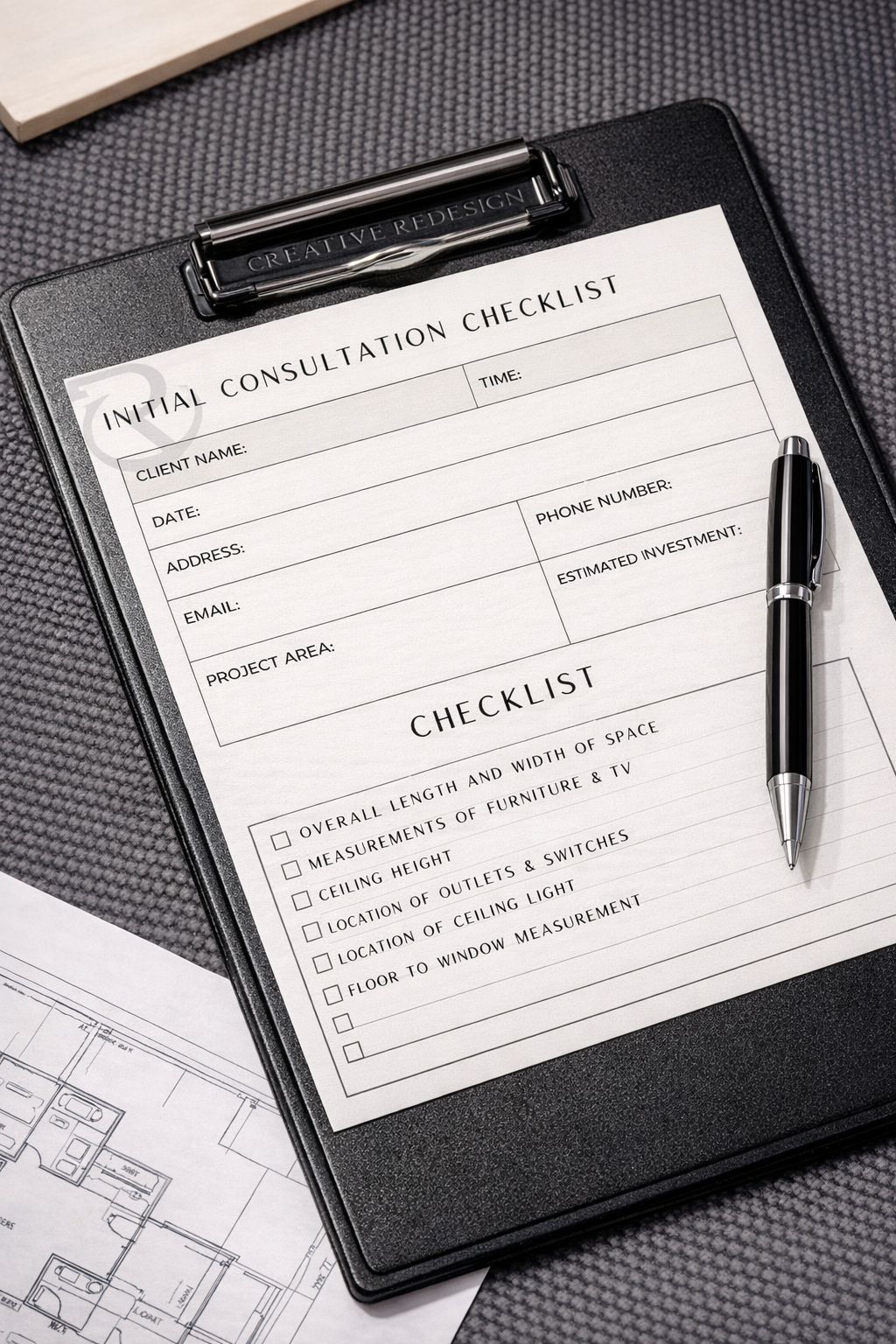
Every material I specify, every proportion I set, every decision I make about
how a room is laid out and lit and finished. All of it traces back to a conversation we had before I ever opened a catalogue.
The questions I ask at the start of a project are not small talk. They are not a formality before the "real" work begins.
They are the real work.
Because a home is not a collection of beautiful objects arranged in a pleasing way. It is a structure built around a life. And before I can build around your life, I need to understand it in detail, with honesty, and without assumption.
Here are the questions I return to most.
"How do you actually use this room, not how you think you should use it?"
This question has changed more floor plans than any trend report.
People are remarkably good at describing how a room is supposed to function. The dining room is for formal dinners. The living room is for relaxing. The home office is for working.
But when I ask how they actually use it, what really happens in that space, day to day, season to season. A completely different picture emerges.
The dining room that's used twice a year but takes up a quarter of the main floor. The living room where everyone ends up in one corner because the layout doesn't encourage anything else. The home office that has become a room they avoid because it doesn't feel like a place they want to be.
I need the honest version. Not the aspirational one.
Because designing around how you think you should live will give you a home that impresses visitors and quietly exhausts you. Designing around how you actually live gives you something far more valuable. A home that works.
"What do you tolerate every single day that you've stopped noticing?"
This is the question that almost always produces a long pause.
Because there is always something. The drawer that sticks. The corridor that feels too narrow. The bathroom that functions perfectly well but never quite feels like a room you want to spend time in. The bedroom that you sleep in but that has never, not once, felt like a sanctuary.
We adapt to our environments remarkably quickly. What began as an irritation becomes the background hum of daily life, present but unexamined, draining energy in ways too subtle to name.
Part of my job is to notice what you've stopped seeing.
To walk through your home, or listen to you describe it, and identify the things that have been quietly working against you. Because when we remove those things, something shifts. The home starts to feel lighter. More generous. More like it's on your side.
"What does home need to feel like at the end of your hardest day?"

This is not a design question in the conventional sense. There is no material sample that answers it directly.
But it tells me everything.
The woman who says "quiet and still, I need to feel like the world stops at the front door" is living in a different home to the woman who says "warm and full, I need to feel surrounded, held, like I'm not alone in it."
Both are valid. Both require completely different decisions, about light, about texture, about proportion, about the way a room greets you when you walk into it.
A home that restores you cannot be designed without knowing what restoration feels like to you. And that answer is yours alone. It cannot be found on Pinterest.
"Who else lives here, and what do they need?"
A home belongs to everyone who lives in it. But the people commissioning the project are not always the ones who will be most affected by it.
I need to understand your household. Not just who shares the space, but how they move through it, what they need from it, and where the tensions are, because in every household, there are tensions.
The partner who works from home and needs genuine separation from the living areas. The child who needs a space that is unambiguously theirs. The dog who has quietly claimed the best chair and is not, under any circumstances, giving it up.
A home that works for your life has to account for all of it. Not compromised into mediocrity, but genuinely considered for everyone who lives there.
"What have you always wanted but never let yourself have?"
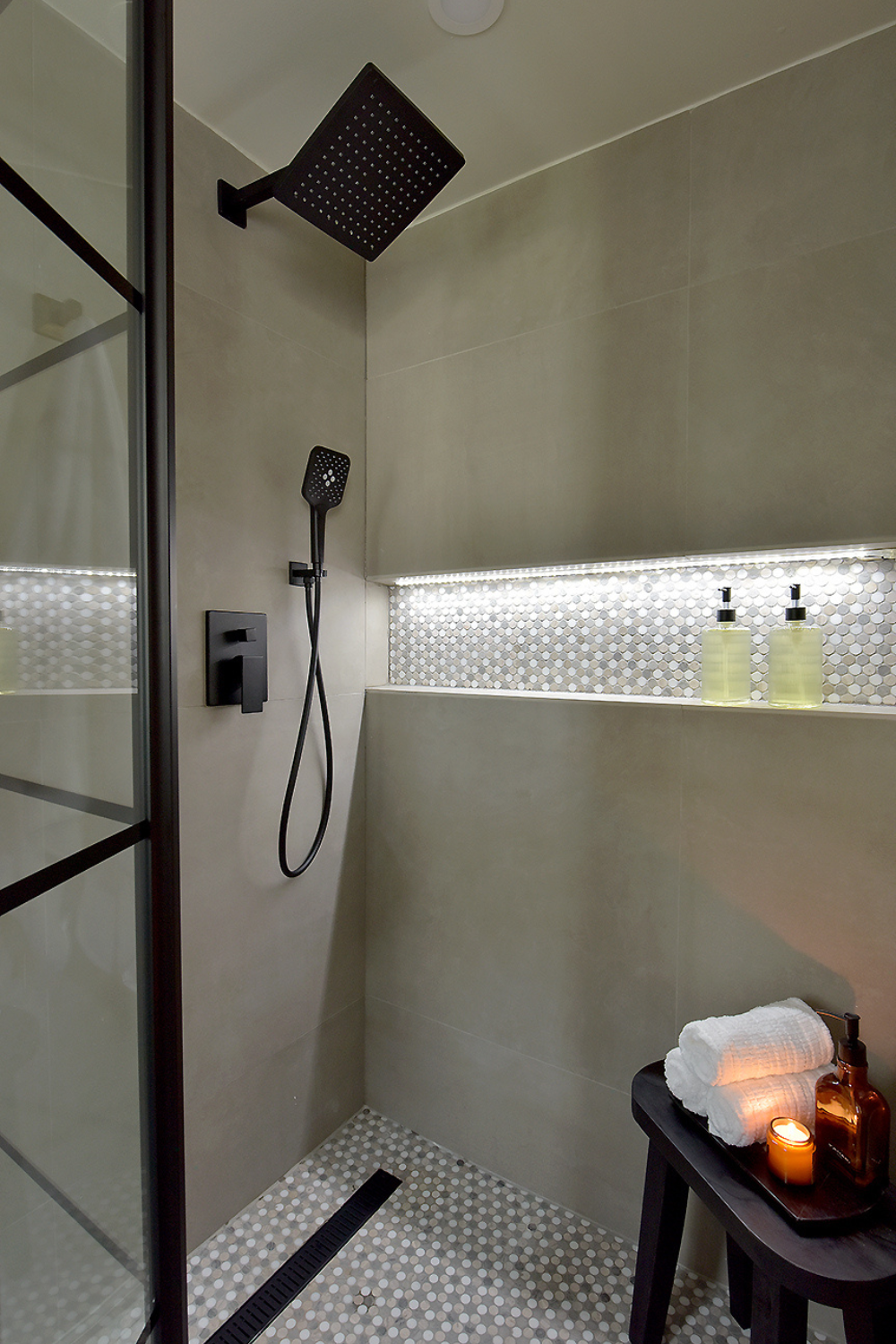
I ask this question deliberately and I ask it late, after trust has been established and the practical questions have been answered.
Because there is almost always something.
A bathroom that feels like a hotel suite. A bedroom that is entirely, unapologetically yours, not a shared space or a functional room but a genuine sanctuary. A kitchen designed for the way you actually cook, not the way kitchens are usually designed. A reading corner that is so perfectly considered you actually use it.
These are not indulgences. They are the things that will make you feel, every single day, that your home was built for you and not simply occupied by you.
I ask because most people won't volunteer it. There's a quiet sense, particularly among high-achieving women who are used to being practical and decisive, that wanting something purely for themselves is somehow excessive.
It is not excessive. It is the point.
What happens after the questions.
Once I understand the answers, really understand them, not just noted them in a brief but sat with them, thought about them, built a picture of your life from them, the material decisions become almost straightforward.
Not easy. Never easy. But guided.
Every choice I make from that point is tested against what I know about you. Does this material serve how she lives? Does this proportion feel right for how she needs this room to feel? Does this layout support the life she described to me in that first conversation?
When the answer to those questions is consistently 'yes,' across every decision, in every room, the result is a home that feels complete in a way that's almost impossible to explain.
Not because of what's in it.
Because of how precisely it fits the person who lives there.
One final thought.

The most common thing clients say when we hand over a finished project is some version of: "I don't know how you knew."
Now you do.
It starts with the questions.
Ready to have this conversation about your own home? We'd love to hear about your project.

