


What Makes a Home Feel Expensive...It's Not What You Think
The quality that stops people in a doorway has almost nothing to do with how much was spent.
There is a particular feeling you get in certain homes.
You walk in and something shifts. The room is calm. It feels considered. Every surface, every proportion, every detail seems to be exactly where it should be, and nothing is where it shouldn't.
You don't immediately know why. You just know it feels different.
People call it expensive. But that's not quite right.
Expensive rooms exist everywhere, and most of them don't feel like this. Hotels furnished with no regard for budget that somehow feel cold. Homes where the price tags are evident and the soul is not. Renovations where every material was premium and the result is still, inexplicably, unsatisfying.
The feeling you're trying to describe has a more precise name.
It's intention.
And intention cannot be purchased. It has to be designed.
What money alone cannot buy.
Let's be honest about something first.
Budget matters. Quality materials have a different weight, a different presence, a different way of aging than their alternatives. I'm not going to pretend otherwise.
But I've walked through homes with extraordinary budgets that felt like nothing. And I've designed spaces with modest ones that stopped people in a doorway.
The difference was never the spend.
It was the decisions made before anything was ordered.
Proportion is everything, and almost nobody talks about it.
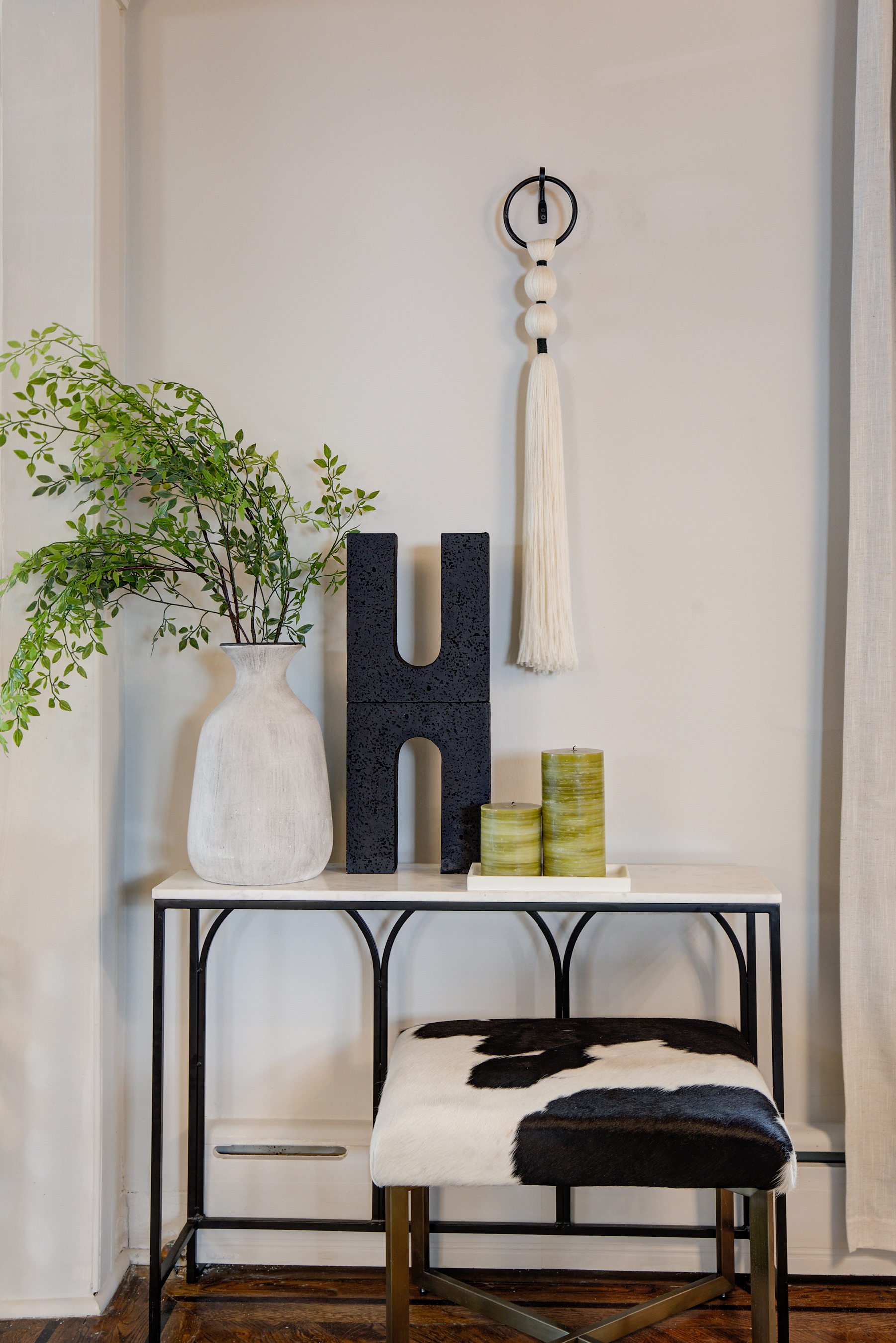
If I had to identify the single quality that separates a room that feels right from one that doesn't, it would be proportion.
Not the furniture. Not the finishes. Not the art on the walls or the lighting overhead.
The relationships between things.
The height of the ceiling relative to the width of the room. The scale of the sofa relative to the wall behind it. The width of a doorframe. The depth of a windowsill. The distance between a dining table and the wall, enough to feel generous, not so much that the room feels cavernous.
When proportion is right, a room feels settled. It has a quiet confidence that doesn't announce itself but that you feel from the moment you enter.
When proportion is wrong, even slightly, something nags. You can't name it. But you feel it every time you walk in.
This is why furniture from a catalogue, arranged without professional guidance, so rarely produces the feeling people are hoping for. The individual pieces may be beautiful. But beauty in isolation is not the same as harmony in a room.
Proportion is the difference between the two.
Restraint is a design decision.
The rooms that feel the most expensive are rarely the fullest ones.
There is a temptation, understandable, human, to fill a space. To add the side table, the extra cushion, the artwork that's been leaning against the wall for six months waiting for a wall. To keep going until the room feels complete.
But the most considered rooms are the ones where someone made the harder decision: to stop.
To leave the wall bare because the room didn't need anything more. To choose one significant piece of furniture instead of three adequate ones. To let a surface breathe instead of styling it within an inch of its life.
Restraint is not minimalism for its own sake. It's the confidence to recognise when a room is finished, and the discipline not to undo it.
That confidence is one of the most valuable things a designer brings to a project. Not the adding. The editing.
Consistency of tone does more than any single statement piece.
Ask most people what makes a room feel luxurious and they'll point to a statement piece. The oversized pendant. The marble island. The artwork that anchors the living room.
And those things matter. When chosen well, they matter enormously.
But a statement piece in an inconsistent room is a distraction, not a focal point.
What makes a room feel cohesive, and cohesion is what the eye reads as expensive, is a consistent tone running through every decision. The warmth of the timber against the warmth of the fabric. The undertone of the wall colour echoed in the veining of the stone. The visual weight of the furniture balanced across the room so no single corner feels heavier than another.
None of these relationships happen by accident.
And most of them are invisible once they're working, which is precisely the point. When tone is consistent throughout a space, the room feels resolved in a way that resists easy analysis. People stand in it and say it just feels right.
What they're responding to is the cumulative effect of a hundred small decisions, each one made in service of the same whole.
Light is the most underestimated material in any room.

Not lighting. Light.
The way natural light moves through a space across the course of a day. Where it lands in the morning. How the room changes at midday, at dusk, at the moment when the shift from daylight to artificial light happens and the room becomes something different entirely.
Great designers think about this before a single fitting is chosen.
Because a room that receives morning light needs different decisions than one that faces west. A kitchen that is bright all day can handle cooler, harder materials. A bedroom that never gets direct sun needs warmth built into every surface, in the timber, the textiles, the tone of the walls, or it will feel flat regardless of how much is spent on it.
And then there is the artificial light itself. Not just what fittings are chosen, but where they are placed, at what height, on which circuit, at what temperature. The difference between a room lit by a single overhead source and one where the light comes from multiple levels, pendants, wall lights, table lamps, under-cabinet strips, is the difference between a room that functions and one that feels like somewhere you want to spend your evening.
Light is not decoration. It is the atmosphere that everything else sits inside.
The details that register without being seen.
There is a category of design decisions that most clients never notice consciously, and that account for a significant portion of why a finished home feels the way it does.
The shadow gap between the joinery and the ceiling that gives the cabinetry a floating, architectural quality. The consistency of the reveal on every door and window throughout the house. The way the flooring runs in a single direction across an open plan to unify the space. The slight extension of a countertop beyond standard depth that makes it feel more generous without looking oversized.
These are not expensive decisions. Most of them cost nothing beyond the thinking.
But they are the decisions that separate a home that looks designed from one that feels designed.
Looks designed means the surfaces are beautiful and the choices are evident.
Feels designed means you walk in and something in you relaxes, without being able to say why.
That second thing is what we're always building toward.
The role of quality...honestly.
I said earlier that budget matters, and I meant it.
There are materials that simply perform differently. Linen that softens over years rather than pilling. Stone that develops a patina rather than looking worn. Timber that ages into something richer rather than something tired.
The case for investing in quality is not about luxury for its own sake. It is about longevity. A room built with considered, quality materials will feel as good in ten years as it does on handover day, sometimes better. A room built on compromised materials often begins to show the compromise within a few years, in ways that are expensive to fix and difficult to ignore.
But quality without intention is still just expensive.
The materials serve the decisions. The decisions serve the life.
That is the order of things, and no budget can substitute for getting it right.
What this means for your home.

If your home has been feeling like something is missing, like it's almost there but never quite resolved, the answer is rarely more.
More furniture. More accessories. More investment in the next renovation.
The answer is usually a more precise understanding of what the room actually needs. Which often means removing something rather than adding it. Reconsidering a proportion. Addressing the light. Letting one considered decision do the work of three unconsidered ones.
This is the work I do before anything is ordered or specified or installed.
And it's why the homes we're proudest of are not the ones with the largest budgets.
They're the ones where every decision, from the largest to the smallest, was made with the same question in mind:
Does this serve the life being lived here?
When the answer is consistently yes, the room stops being a collection of beautiful things.
And it becomes a home that feels, inexplicably, exactly right.

